
Pearlescent Pigment Types Explained: Silver White, Interference, Gold and Multicolor Pigments
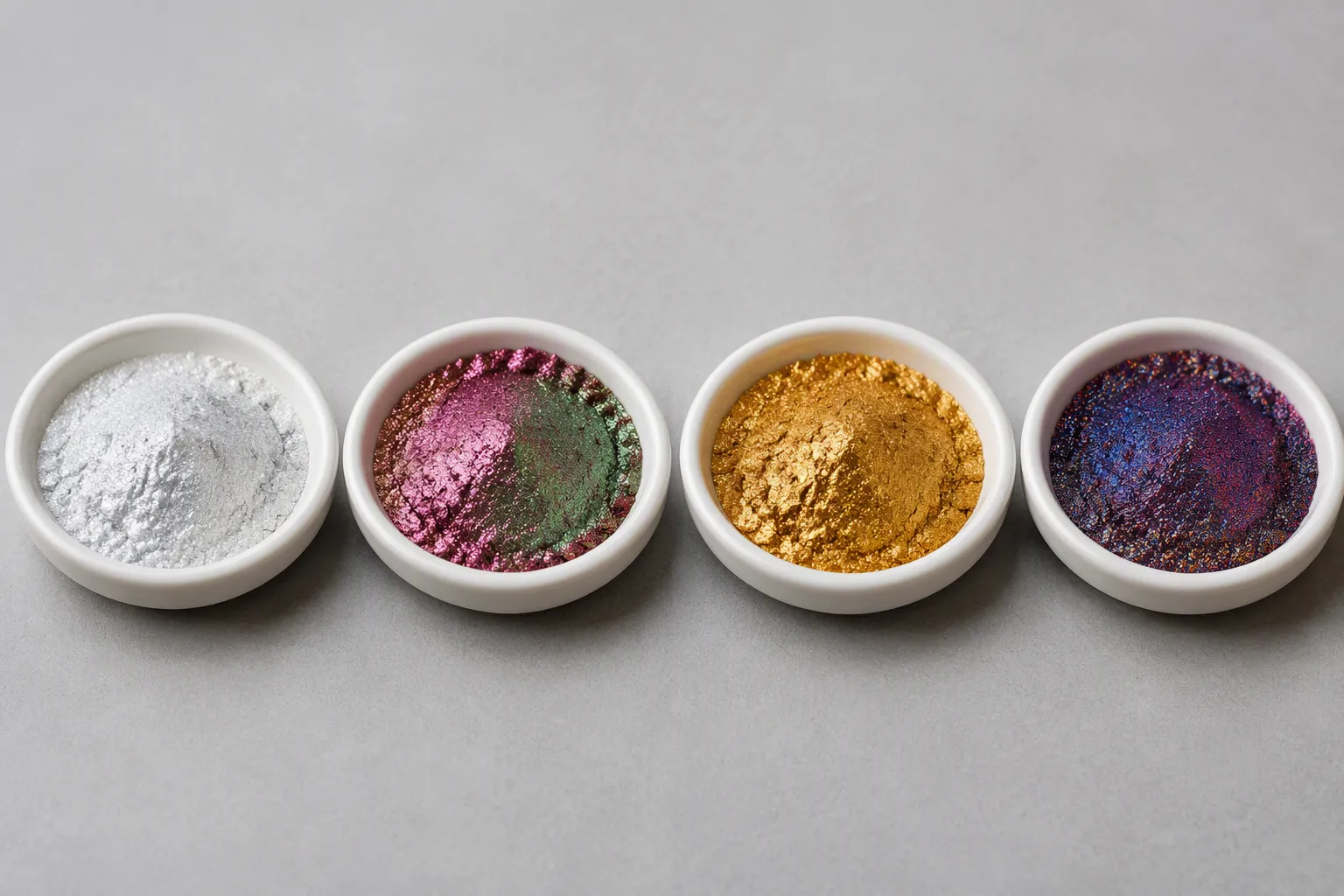
Pearlescent pigments are effect pigments that create soft shimmer and pearl-like luster through light reflection. The main types of pearlescent pigments are silver white, interference, gold, and multicolor. Each type produces a distinct visual effect and suits different applications, so matching the right pigment to your project saves time and cost. Kolortek offers all four families with consistent quality and reliable batch-to-batch performance.
|
Metric |
Value |
|---|---|
|
Estimated demand (2026) |
USD 4.36 billion |
|
Projected market size (2036) |
USD 6.12 billion |
|
CAGR (2026–2036) |
3.8% |
Key Takeaways
-
Learn the four main types of pearlescent pigments: silver white, interference, gold, and multicolor. Each type creates a different visual effect.
-
Match the pigment type to your project's needs. Consider the desired look, the application method, and durability requirements.
-
Always test pigment samples in your actual formulation before full-scale production. Small tests help you avoid costly mistakes.
How Pearlescent Pigments Create Their Effect
Light Reflection and Refraction Basics
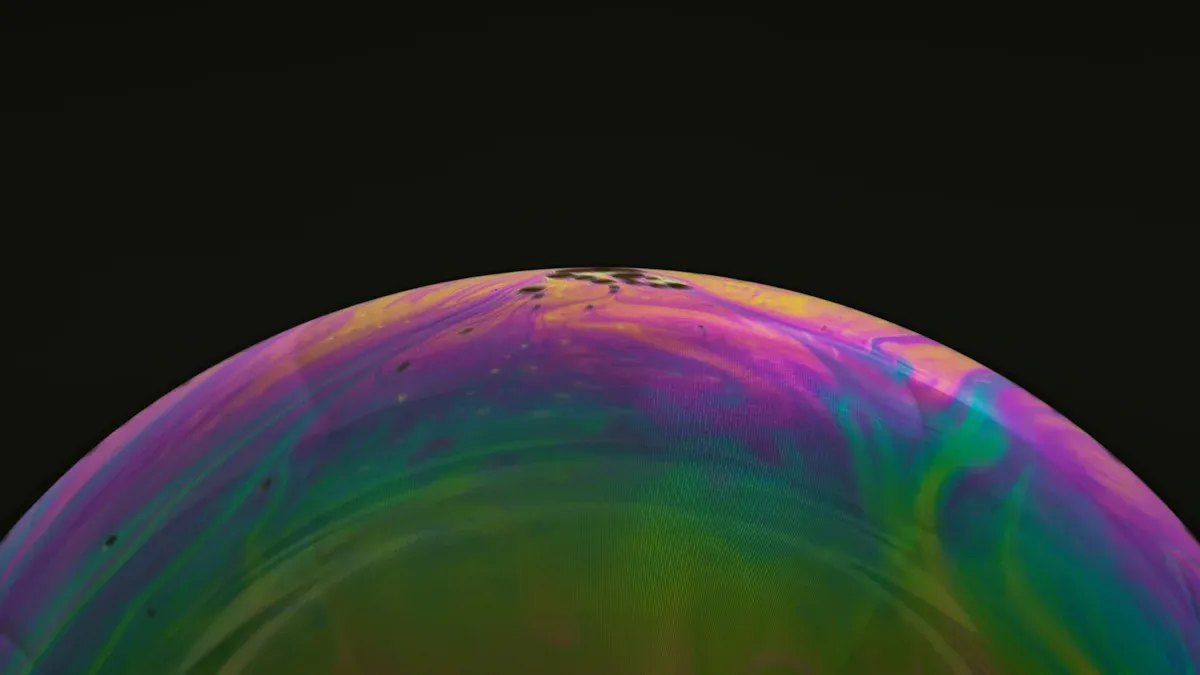
You can think of a pearlescent pigment as a tiny layered mirror. The pigment consists of at least three layers with different refractive indices: a thin substrate such as mica, silica, or glass, coated with a high-refractive metal oxide like titanium dioxide. When light hits the pigment, part of the beam reflects off the top surface. The rest passes through the transparent layers and reflects internally at lower interfaces. This layered structure enables light to bounce at different angles, and the result is the soft, pearl-like luster you see.
Pearlescent effects arise from microscopic flakes that scatter light in a diffuse way and reflect multiple wavelengths simultaneously, producing a soft, luminous glow with gentle color shifts rather than strong rainbow-like iridescence.
The Role of Light Interference
Interference is the engine behind pearlescent color. At each boundary between materials of differing densities, light is partly reflected and partly refracted. These multiple reflections combine. When the interference is constructive, a strong color stimulus appears. A specific titanium dioxide coating thickness causes only a narrow band of wavelengths to reflect in phase, while other wavelengths cancel out. Because the platelets are transparent, part of the light transmits through, so you see the complement of the reflected color. This is the same thin-film interference you observe in an oil film on water.
Why Coating Thickness Changes Color
Coating thickness directly determines the color you observe. As the titanium dioxide layer grows thicker, the reflected interference color shifts in sequence: silver, then yellow, red, blue, and finally green. Intermediate thicknesses produce orange, violet, and blue-green shades. Iron oxide coatings work the same way, shifting from brass to copper to russet as thickness increases. Kolortek controls this coating precision tightly, so you get consistent color from batch to batch.
The Four Main Types of Pearlescent Pigments
You now understand how light interference drives the pearl effect. The next step is to match that physics to a pigment family. The four main types of pearlescent pigments each use a different coating strategy, and each delivers a distinct visual result. Kolortek manufactures all four families with tight coating control, so you can specify the exact effect your project needs.
Silver White Pigments: Clean, Bright Pearl Luster
Silver white pigments rely on a titanium dioxide coating over a mica substrate. This coating produces a neutral, bright reflection with no color shift. The effect reads as classic pearl: clean, soft, and luminous. Particle size is your main control lever here. Small particles give a smooth satin sheen, while large particles deliver sparkle and glitter.
Kolortek offers a broad silver white range, and the size-to-luster relationship is easy to see in the product line:
|
Product |
Particle Size (microns) |
Luster Characteristic |
|---|---|---|
|
AS 8500 |
25–100 |
Flash penguin white, glittering pearl luster |
|
AS 110 |
< 15 |
Bright silver luster, silver fine satin |
|
AS 8700 |
40–160 |
Super flash glitter penguin white |
|
AS 8600 |
30–120 |
Sparkle penguin white, glittering pearl luster |
|
AS 8300 |
10–60 |
Crystal luster, pearl luster |
|
AS 173 |
10–40 |
Silky pearl-like luster |
|
AS 120 |
5–25 |
Bland pearl luster, silky soft |
|
AS 108 |
< 10 |
White luster, fine satin, dazzling luster |
|
AS 111 |
< 15 |
Silver fine satin |
|
AS 8900 |
60–350 |
Super flash luster |
|
AS 8800 |
50–250 |
Super penguin white, glittering pearl luster |
|
AS 119 |
5–20 |
Sparkle pearl-like luster |
|
AS 118 |
5–20 |
High flash pearl-like luster |
These pigments suit a wide field of applications. The AS 8300 crystal white grade, for example, delivers its pearl luster effect primarily in paint and coating applications. You will also find silver white grades in plastics, printing inks, and cosmetics. Kolortek keeps particle size distribution consistent across batches, so your formulation performs the same way every time.
Interference Pigments: Color-Shifting Effects
Interference pigments take the same layered structure and turn it into color travel. The mechanism follows a clear sequence:
-
Light strikes a platelet pigment whose coating thickness is precisely controlled.
-
Part of the light reflects from the top layer, while part penetrates and reflects from lower interfaces.
-
The reflected waves interfere—reinforcing certain wavelengths (colors) and cancelling others.
-
This produces an angle-dependent color, commonly called interference, color travel, or shift.
-
Because the optical path length changes with viewing geometry, the pigment appears subtle head-on but strongly colored at an angle.
This angle dependence is the defining trait of interference pigments. You see one hue face-on and a different hue at a glance angle. Kolortek tunes the oxide layer thickness to set the exact shift color, from blue-to-violet to green-to-gold.
Interference pigments have a long history across decorative and industrial markets:
Interference pigments were brought into artists' materials from decorative applications in crafts and cosmetics, which had adopted them from sparkly textures first used in consumer packaging and plastics. Natural pearl essence is prized for its toughness and subtle iridescent warmth and is primarily used in shampoos and cosmetics.
Today the application list is broad:
-
Paint
-
Printing ink
-
Plastics
-
Ceramics
-
Decoration
-
Cosmetics
-
Auto paint
-
Paper & cards
-
Leather
-
Textiles
-
Crafts
-
Nail polish
The dyeing-series pearlescent pigments are mostly used in color cosmetics, plastics, coatings, and other industries. Formulators also rely on interference grades in demanding coating systems. Two common examples are a waterborne acrylic pearlescent metallic paint, a basic golden base paint formula designed to maximize the pearly luster color, and an oily two-component acrylic automotive metallic paint, an acrylic-resin-based metallic paint formulation for automotive use. Kolortek supplies interference grades that disperse cleanly in both waterborne and solventborne systems.
Gold Pigments: Warm Metallic Richness
Gold pigments achieve their warm tone through an iron oxide coating rather than a titanium dioxide treatment. The iron oxide layer produces the gold color and the pearlescent effect at the same time. This is the key structural difference between gold grades and the white and silver grades. Kolortek controls iron oxide deposition carefully, so the gold tone stays warm and rich without drifting toward brown.
Gold pearlescent pigments serve a niche yet vital segment of the broader pigments industry, characterized by application across various sectors, including automotive, cosmetics, and coatings. Two industrial uses stand out:
|
Industrial Application |
How Gold Pearlescent Pigments Are Used |
|---|---|
|
Printing Inks |
Added to commercial and artistic printing to impart a luxurious sheen; gold (and silver) pearl pigments are favored for premium packaging and high-end advertisements, with a trend toward finer particles for subtle, sophisticated effects. |
|
Automotive Paints |
Used to achieve a deep, iridescent finish on vehicles; pigments must withstand harsh environmental conditions without losing luster, giving cars a sleek, modern appearance. |
Gold grades also appear in decorative wall paints, plastics, and cosmetic formulations. Kolortek tests each gold batch for weather resistance, which matters most in exterior automotive and architectural coatings.
Multicolor Pigments: Layered Color Play
Multicolor pigments push interference further. Their interference stacks are engineered with extra coating layers or greater thickness, allowing multiple interference orders to occur at once. As the viewing angle shifts, these stacked interference effects reveal successive hues in sequence (for example, red → orange → yellow → green) over a wider angular range than a two-color duochrome pigment, which only transitions between two primary colors. A trade-off is that each individual hue appears less saturated because it occupies a narrower angular window.
The underlying optics are straightforward:
Iridescent pigments are typically composed of mica or other substrates coated with multiple layers of metal oxides. The interaction of light with these layers creates a play of colors that change with the viewing angle.
This layered color play opens a wide application map:
|
Industry |
Typical Application |
|---|---|
|
Plastics |
Decorative plastic products |
|
Coatings |
Automotive, industrial, and decorative coatings |
|
Cosmetics |
Nail polish, eyeshadows, and lip products |
|
Printing Inks |
Screen printing, gravure, and flexographic printing |
|
Textiles |
Fabric printing and dyeing |
|
Wall Paint |
Metallic finishes (gold, silver, bronze, copper) and multi-color visual effects |
Multicolor grades reward careful design work. You get the widest color travel of the four types of pearlescent pigments, and you get it across a broad angular range. Kolortek engineers multicolor stacks to order, so you can specify the hue sequence and the angular spread your product needs.
How to Choose the Right Pearlescent Pigment
You have four pigment families to work with, and each one behaves differently in formulation. The right choice depends on three factors: the optical effect you want, the substrate and system you work in, and the durability your product demands. Kolortek helps you narrow the field by matching pigment grade to application from the start.
Key Characteristics at a Glance
Before you compare individual products, compare the substrate behind the pigment. Natural mica and synthetic mica produce different performance profiles, and that difference shapes your selection.
|
Characteristic |
Natural Mica Pearlescent Pigments |
Synthetic Mica Pearlescent Pigments |
|---|---|---|
|
Raw Materials |
Sourced from natural mica minerals; authentic but limited supply and higher cost |
Chemically synthesized from abundant materials; lower cost |
|
Color Effect |
Authentic, nuanced hues with unique luster |
More uniform color, narrower hue range, harder to replicate natural brilliance |
|
Stability |
Lower stability; prone to degradation from light, heat, chemicals (discoloration/fading) |
Higher stability; retains color and luster under harsh conditions, more durable |
|
Environmental Considerations |
Perceived as eco-friendly, but ethical mining and extraction impact are concerns |
Cost/stability advantages, but production may generate harmful by-products, raising sustainability concerns |
Read this table as a trade-off map. Natural mica gives you authenticity and nuance. Synthetic mica gives you consistency and durability. Kolortek supplies both substrate options across the four types of pearlescent pigments, so you can weigh cost against performance without switching suppliers.
Particle size is your second comparison axis. Fine grades under 15 microns deliver a smooth satin sheen with low sparkle. Coarse grades above 60 microns deliver flash and glitter. Mid-range grades balance the two. Coating thickness is your third axis, and it sets the interference color as described earlier. Kolortek publishes particle size distribution for every grade, which lets you predict dispersion behavior and surface appearance before you run a trial.
Matching Pigment Type to Application
Application requirements drive pigment selection more than any other factor. A pigment that performs beautifully in a cosmetic compact may fail in an exterior automotive clearcoat. Use the criteria below to screen candidates for your specific system.
|
Application |
Decision Criteria for Pigment Selection |
|---|---|
|
Exterior paints |
Weathering/UV exposure resistance, mechanical abrasion resistance, long-term appearance retention, robust pigment-resin interaction, batch-to-batch repeatability, alignment with clearcoat system |
|
Interior coatings |
Tactile quality, visual depth under varied/indoor lighting, visual uniformity, scratch and wear tolerance, compatibility with interior-grade resins and system requirements |
|
Plastic parts |
Dispersion behavior in polymer systems, compatibility with polymer processing, resistance to color shift/surface degradation, adhesion and durability, dispersion stability |
Now match the pigment family to those criteria. Natural pearl pigments suit effect authenticity, tailored optical behavior, premium-grade formulations, and particular aesthetic or surface-interaction characteristics. Synthetic pearl pigments suit tighter lot-to-lot control, specific reflectance targets, process repeatability in high-volume platforms, controlled particle attributes, and manufacturability.
Vehicle programs add another layer of decision criteria. Passenger, commercial, and electric vehicles differ in styling expectations, durability requirements, visual uniformity tolerances, and supply-chain qualification practices. EV programs emphasize a stable visual identity across different surface treatments. System-level validation matters too. Performance is increasingly validated at the coating-and-substrate level rather than the pigment level alone. Your selection must account for dispersion during mixing, application, and curing, plus integration into automated paint lines. Procurement and qualification differences then determine formulation pathways and qualification timelines, which shapes where adoption ramps faster or more cautiously.
Kolortek supports this matching process with application-specific technical data. Each grade ships with dispersion guidelines, recommended loading levels, and compatibility notes for common resin systems. That documentation shortens your qualification cycle and reduces trial-and-error.
Common Misconceptions About Pearlescent Pigments
Several myths persist about these pigments, and each one can lead you toward a poor specification decision.
A frequently cited misconception is that a Color Index (CI) number or a European E number implies FDA certification for mica-based pearlescent pigments. These identifiers carry no legal standing in the United States. Such labels do not constitute FDA approval. Verify regulatory status directly with your supplier and confirm the specific grade meets your market's requirements.
Another common myth treats pearlescent pigments as identical to metallic pigments. They are not. Metallic pigments give a stronger reflective effect. Pearlescent pigments produce softer, layered effects built on light interference. The two families serve different design goals, and substituting one for the other changes the entire visual character of your product.
Cost is a third source of confusion. Many buyers assume pearlescent pigments are expensive. Prices vary widely by quality and application, and options exist for different budgets. Kolortek offers grades across the price spectrum, so you can hit a target cost without sacrificing the effect your product needs.
A fourth myth claims pearlescent pigments are difficult to use. With proper formulation and supplier guidance, they are easy to use in most systems. Dispersion, loading level, and resin compatibility follow predictable rules. Kolortek provides formulation support that turns those rules into a working production process.
One final point deserves attention. The four types of pearlescent pigments are not interchangeable, and no single grade fits every application. Test your candidate pigment in the actual system before you commit to full-scale production. A small panel trial reveals dispersion quality, color travel, and durability under real conditions. Kolortek supplies sample quantities for exactly this purpose, and the trial results will confirm whether your selection meets the brief.
Silver white pigments deliver clean pearl luster. Interference pigments shift color with viewing angle. Gold pigments bring warm metallic richness. Multicolor pigments layer color play across angles. Match each of the four types of pearlescent pigments to your desired effect and application. Test samples in your target base before full-scale production—small formulation errors can ruin outcomes.
FAQ
How do you tell the four pearlescent pigment types apart?
You check the coating and the effect. Silver white pigments show neutral pearl luster, interference pigments shift hue with angle, gold pigments carry warm iron oxide tones, and multicolor pigments reveal layered color sequences.
Which pearlescent pigment type gives the strongest color shift?
Interference and multicolor pigments deliver the strongest color travel. Interference grades shift between two hues, while multicolor grades reveal a longer sequence across a wider viewing angle. Kolortek tunes both families to your target shift.
Can you combine different pearlescent pigment types in one formulation?
You can blend pigment types to build custom effects. Pair silver white grades with interference grades for depth, or add gold grades for warmth. Test blends in your actual system first, and Kolortek supplies samples for that trial.