
Generator Prime vs Standby Rating
When comparing diesel generators, buyers often encounter two main power ratings: Prime Power (PRP) and Emergency Standby Power (ESP). Although both indicate the electrical output a generator can deliver, they represent different operating conditions and are intended for different applications.
Prime Power is designed for supplying variable electrical loads over extended operating periods, while Standby Power is intended to provide backup electricity when the normal utility supply fails. Standby ratings are generally higher than prime ratings for the same generator set, but the higher output is not intended for continuous daily operation.
Understanding these differences is essential when selecting a diesel generator for industrial facilities, construction projects, data centers, mining operations, and commercial buildings. This guide explains how PRP and ESP ratings work, how they compare with Continuous Power (COP), and how to choose the right generator capacity for your application.
What Is Prime Power Rating in a Diesel Generator?
Prime Power (PRP) is the maximum power a generator set can deliver continuously while supplying a variable electrical load under specified operating conditions. It is intended for applications where the generator serves as a regular or primary electricity source rather than an emergency backup unit.
Under ISO 8528-1 rating definitions, prime power allows unlimited annual operating hours, provided the generator operates within its specified load profile, maintenance intervals, and environmental conditions. The permissible average power output over a 24-hour operating period is generally limited to 70% of the declared PRP unless otherwise agreed with the engine manufacturer.
Some prime-rated generator configurations may also allow a 10% overload for one hour within a 12-hour period. However, this capability is subject to the applicable rating standard and the engine manufacturer's explicit approval. It should never be assumed to apply to every generator.
Typical Applications of Prime Power Generators
Prime-rated generators are commonly selected for projects where grid electricity is unavailable, unreliable, or unable to meet the required power demand.
- Mining camps and remote industrial facilities
- Construction sites and infrastructure projects
- Off-grid manufacturing and processing plants
- Oil and gas exploration operations
- Remote telecommunications installations
- Island electrification and isolated power systems
For these applications, generator sets must handle changing electrical demand over extended operating periods. Engine performance, cooling capacity, fuel consumption, load management, and maintenance planning all influence long-term reliability.
KEYPOWER supplies different engine configurations and output capacities through its diesel generator product range, supporting a variety of industrial and commercial power requirements.
Thermal Management and Engine Wear Under Prime Duty
Generators operating for extended periods must maintain appropriate engine temperatures and combustion conditions. Cooling system capacity, radiator performance, lubrication, and air circulation all contribute to reliable operation.
Operating a diesel engine continuously at an excessively low load can also lead to incomplete combustion and wet stacking, where unburned fuel and carbon deposits accumulate in the exhaust system. This is particularly relevant to prime power installations with fluctuating or consistently low electrical demand.
To reduce these risks, project engineers should assess the actual load profile, avoid prolonged underloading where possible, and follow the engine manufacturer's recommended operating and maintenance procedures.
What Is Standby Power Rating in a Generator?
Emergency Standby Power (ESP) is the maximum power a generator set can provide during an interruption of the normal utility power supply. It is intended for emergency operation rather than continuous primary electricity generation.
Under commonly applied ISO 8528-1 rating conditions, ESP generators are designed for limited annual operating hours, typically up to 200 hours per year. The precise permissible operating duration and load conditions must be confirmed in the manufacturer's technical documentation.
Typical Applications of Standby Generators
Standby-rated generators are particularly important for facilities where unexpected power interruptions can disrupt operations, damage equipment, or affect essential services.
- Hospitals and healthcare facilities
- Data centers and server rooms
- Commercial buildings and office complexes
- Manufacturing plants requiring emergency backup
- Telecommunications infrastructure
- Water treatment and public utility facilities
For example, a data center may use utility electricity during normal operation while maintaining a standby diesel generator for emergency power. When a grid failure occurs, an automatic transfer switch can transfer the designated electrical loads to the generator after the required starting and stabilization sequence.
For facilities operating on a 50Hz electrical system, selecting a suitable 50Hz diesel generator configuration also requires checking voltage, frequency, engine specifications, and the electrical requirements of connected equipment.
Why Standby Generators Have a Higher Rated Output
For the same generator set, the standby rating is generally higher than the prime rating. This is because the two ratings are based on different operating duty cycles and permissible loading conditions.
A standby generator is designed to supply emergency power for a limited duration. A prime-rated generator must accommodate regular operation over extended periods while remaining within its specified thermal and mechanical limits.
The higher standby output therefore represents a different operating capability, not additional capacity that can be used freely during everyday operation.
Prime Power vs Standby Power: Key Differences
The following table summarizes the main differences between Prime Power and Emergency Standby Power for diesel generator selection.
| Evaluation Metric | Prime Power (PRP) | Standby Power (ESP) |
|---|---|---|
| Main purpose | Primary or regular power supply | Emergency backup power |
| Annual operating hours | Unlimited under specified conditions | Typically up to 200 hours per year |
| Load profile | Variable electrical load | Variable emergency load |
| Average load conditions | Generally up to 70% over 24 hours | Subject to the manufacturer's ESP rating conditions |
| Overload capability | May allow 10% for 1 hour in 12 hours if specified | No overload beyond the declared rating |
| Typical applications | Mining, construction, off-grid industry | Hospitals, data centers, commercial backup |
Important: These are general rating characteristics, not universal operating guarantees. Actual limits depend on the applicable standard, engine manufacturer, generator configuration, and declared technical specifications.
Prime Power, Standby Power, and Continuous Power Explained
Besides PRP and ESP, buyers may also encounter Continuous Operating Power (COP) in generator specifications. Understanding all three classifications helps engineers compare generator sets accurately.
Prime Power (PRP)
Prime Power is intended for supplying variable electrical loads over unlimited annual operating hours under specified conditions. It is suitable for primary power applications where demand changes throughout the operating cycle.
Emergency Standby Power (ESP)
Emergency Standby Power is designed to supply variable electrical loads when the normal utility power source fails. Its operating duration and loading conditions are limited by the applicable rating requirements.
Continuous Operating Power (COP)
Continuous Power is the maximum output a generator set can supply continuously to a constant electrical load for unlimited annual operating hours under agreed operating conditions. Unlike PRP, COP is designed for a constant load profile and does not provide an overload capability.
The key distinction is that PRP accommodates variable loads, COP is intended for constant loads, and ESP is reserved for emergency power supply. These classifications help buyers determine which generator duty is appropriate for their project.
Real Generator Rating Example: KEYPOWER Cummins Diesel Generators
Looking at actual generator specifications makes the difference between prime and standby ratings easier to understand. KEYPOWER offers diesel generator models with clearly stated PRP and ESP outputs.
Large Industrial Generator: KP-C2000P
For large industrial facilities and infrastructure projects, the KEYPOWER KP-C2000P is a 50Hz diesel generator powered by a Cummins QSK50-G17 engine.
- Model: KP-C2000P
- Prime Power: 1600 kW / 2000 kVA
- Standby Power: 1760 kW / 2200 kVA
- Engine: Cummins QSK50-G17
- Fuel Consumption at 100% Load: 419 L/h
- Frequency: 50Hz
The difference between its two ratings is 160 kW, or 200 kVA. The higher standby figure is intended for emergency operation under the specified ESP conditions, while the prime rating applies to regular variable-load operation.
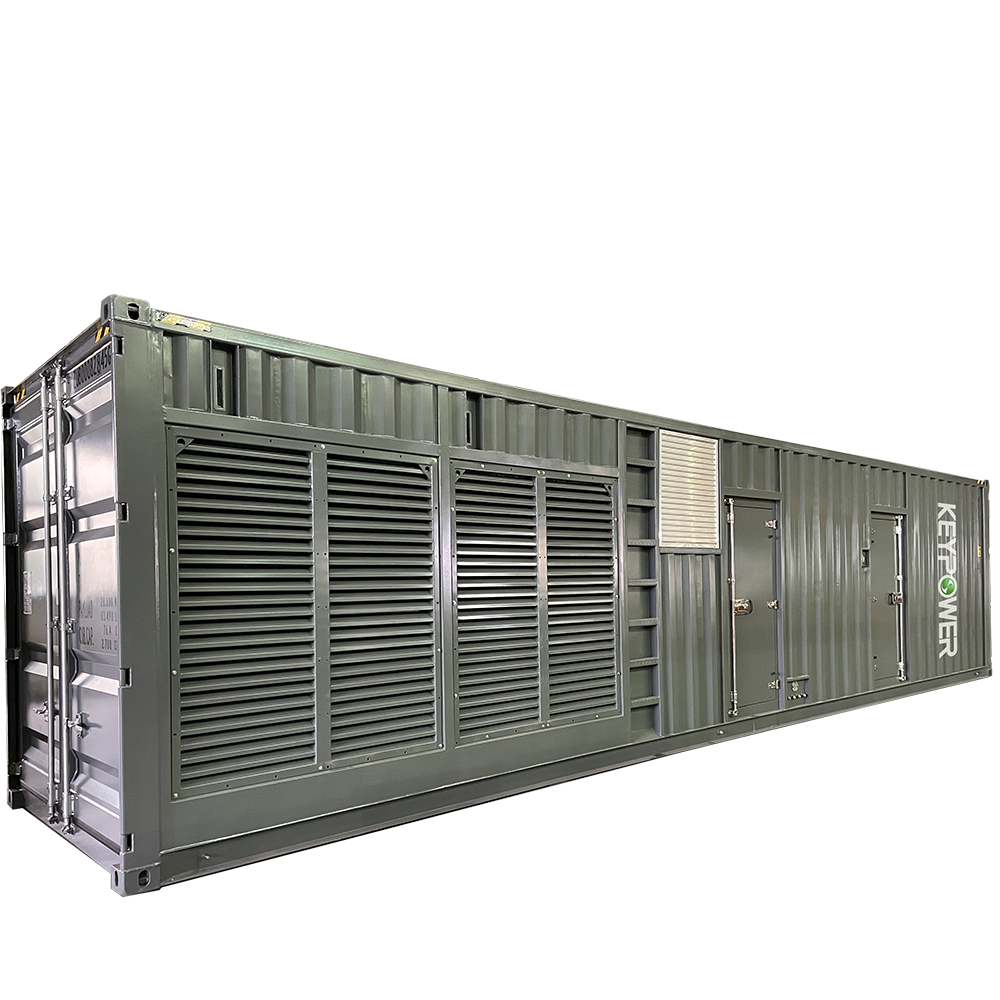
Buyers planning large-capacity power installations can review the KP-C2000P 2000 kVA Cummins diesel generator specifications for further technical details.
Smaller Generator Example: KP-C25P
The same rating principle applies to smaller generator sets. The KEYPOWER KP-C25P uses a Cummins 4B3.9-G1 engine and has the following specifications:
- Prime Power: 20 kW / 25 kVA
- Standby Power: 22 kW / 27.5 kVA
- Engine: Cummins 4B3.9-G1
- Frequency: 50Hz
- Fuel Consumption at 100% Load: 7.1 L/h
This example shows that the standby rating is higher even in a smaller generator configuration. However, the correct selection still depends on whether the generator will operate as a regular power source or an emergency backup unit.

View the complete KP-C25P 25 kVA Cummins generator specifications to compare its rated outputs and technical configuration.
How to Choose the Right Generator Power Rating for Your Project
Selecting between PRP and ESP requires more than comparing the two numbers on a product datasheet. Engineers and procurement teams should evaluate the complete operating profile before choosing a generator.
Assess Grid Reliability and Operating Hours
Determine whether the generator will operate regularly or only during utility interruptions. If the site depends on generator power for daily operations, a prime-rated configuration is generally more appropriate. If the generator is reserved for occasional emergency use, an ESP-rated model may be suitable.
Frequent or prolonged grid failures should also be considered carefully. A backup generator that operates regularly for extended periods may require a different rating strategy.
Calculate Running Loads and Starting Loads
List all equipment that will operate simultaneously, including motors, pumps, compressors, lighting, and production machinery. Motor starting currents can be significantly higher than normal running currents, so the generator must be able to accommodate these transient demands.
Engineers should also consider power factor, voltage drop, load sequencing, harmonic loads, and possible future expansion when calculating generator capacity.
Consider Environmental and Installation Conditions
Ambient temperature, altitude, humidity, ventilation, and installation conditions can influence available generator output. For example, a generator operating at a high-altitude mining site may require derating compared with a unit installed under standard reference conditions.
These factors should be reviewed before confirming the final generator capacity and engine configuration.
Verify Generator Performance Through Load Testing
Load testing is an important part of generator commissioning and maintenance. It helps verify whether a generator can accept the required electrical load while maintaining acceptable voltage and frequency performance.
A properly configured load bank can simulate electrical demand under controlled conditions. For projects requiring generator testing, buyers can also review KEYPOWER's resistive and inductive load bank solutions.
Before purchasing, request the manufacturer's datasheet and confirm the prime and standby ratings, engine model, alternator specifications, fuel consumption, and applicable operating limits.
Common Mistakes When Comparing Prime and Standby Ratings
Misunderstanding generator duty ratings can lead to incorrect equipment selection, higher maintenance costs, and unexpected operational problems. Common mistakes include:
- Selecting based only on the highest kVA figure: Standby output should not be treated as the generator's continuous operating capacity.
- Using a standby generator for regular prime applications: This may exceed the declared duty conditions and affect equipment reliability and warranty coverage.
- Ignoring motor starting requirements: Running loads alone may not represent the actual generator capacity required.
- Overlooking environmental derating: High temperatures and altitude can reduce available output.
- Comparing kVA without checking kW: Both values should be evaluated alongside the specified power factor and connected load characteristics.
- Ignoring low-load operation: Prolonged underloading can contribute to incomplete combustion and wet stacking in diesel engines.
A reliable selection process should match the generator rating to the actual operating duty, not simply the largest output displayed in a quotation.
Frequently Asked Questions About Generator Prime and Standby Ratings
What is the main difference between prime power and standby power?
Prime Power (PRP) is designed for supplying variable electrical loads over unlimited annual operating hours under specified conditions. Standby Power (ESP) is intended for emergency electricity supply during interruptions of the normal utility source and has limited annual operating hours.
Is standby power higher than prime power?
Yes. Standby power is generally higher than prime power for the same generator set because it is designed for a limited emergency duty cycle. The higher output should not be used as the generator's regular operating capacity.
Can a standby generator be used as a prime power generator?
A standby-rated generator should not be used as a regular prime power source unless the manufacturer has approved and specified an appropriate rating for that operating duty. Operating beyond the declared ESP conditions may increase engine stress and affect equipment reliability.
How many hours can a prime generator run?
A prime-rated generator is designed for unlimited annual operating hours under the specified operating conditions and maintenance schedule. However, its average load and other operating limits must remain within the manufacturer's declared PRP requirements.
How many hours can a standby generator operate per year?
Under commonly applied ISO 8528-1 ESP rating conditions, standby generators are typically limited to 200 operating hours per year. Buyers should confirm the exact annual limit and permitted load conditions in the manufacturer's documentation.
What is the difference between PRP, ESP, and COP?
PRP refers to Prime Power for variable loads over unlimited annual operating hours. ESP refers to Emergency Standby Power for backup operation during utility failures. COP refers to Continuous Operating Power for supplying a constant load continuously under specified conditions.
Why is prime power generally rated at a lower output than standby power?
Prime power is intended for regular operation over extended periods, while standby power is intended for limited emergency use. The different duty cycles and operating conditions allow the same generator set to have a higher declared standby output than prime output.
How do I calculate the generator capacity required for my project?
Start by calculating the total simultaneous running load, then evaluate motor starting currents, power factor, load fluctuations, and potential future expansion. Also consider environmental derating and the generator's intended PRP or ESP duty. A generator supplier or electrical engineer can help verify the final capacity.
Choose a Suitable Diesel Generator with KEYPOWER
Choosing between Prime Power and Standby Power is an important step in designing a reliable power generation system. The correct rating depends on operating hours, load characteristics, grid reliability, environmental conditions, and the role of the generator within the electrical system.
KEYPOWER provides diesel generator sets with different power outputs and engine configurations, including Cummins-powered models for industrial and commercial applications. By comparing actual PRP and ESP specifications and evaluating project operating requirements, buyers can identify a generator configuration that meets their power demand.
Whether you need a prime-rated generator for regular industrial operation or an emergency standby unit for critical facilities, contact KEYPOWER with your required power output, voltage, frequency, application, and expected operating hours to discuss a suitable generator solution.