
Why Is Bottle Neck Accuracy Important for Cosmetic Filling and Capping?
Bottle neck accuracy is important for cosmetic filling and capping because it determines whether a glass bottle can connect correctly with filling equipment, caps, pumps, droppers, and other closure components. Even small dimensional variations in the neck finish can affect closure alignment, sealing performance, capping consistency, and production efficiency.
For cosmetic manufacturers, the bottle body may have an attractive shape and the correct capacity, but that does not guarantee that it will work properly on an automated filling line. The opening diameter, neck height, thread profile, and sealing surface must match the packaging design and production requirements.
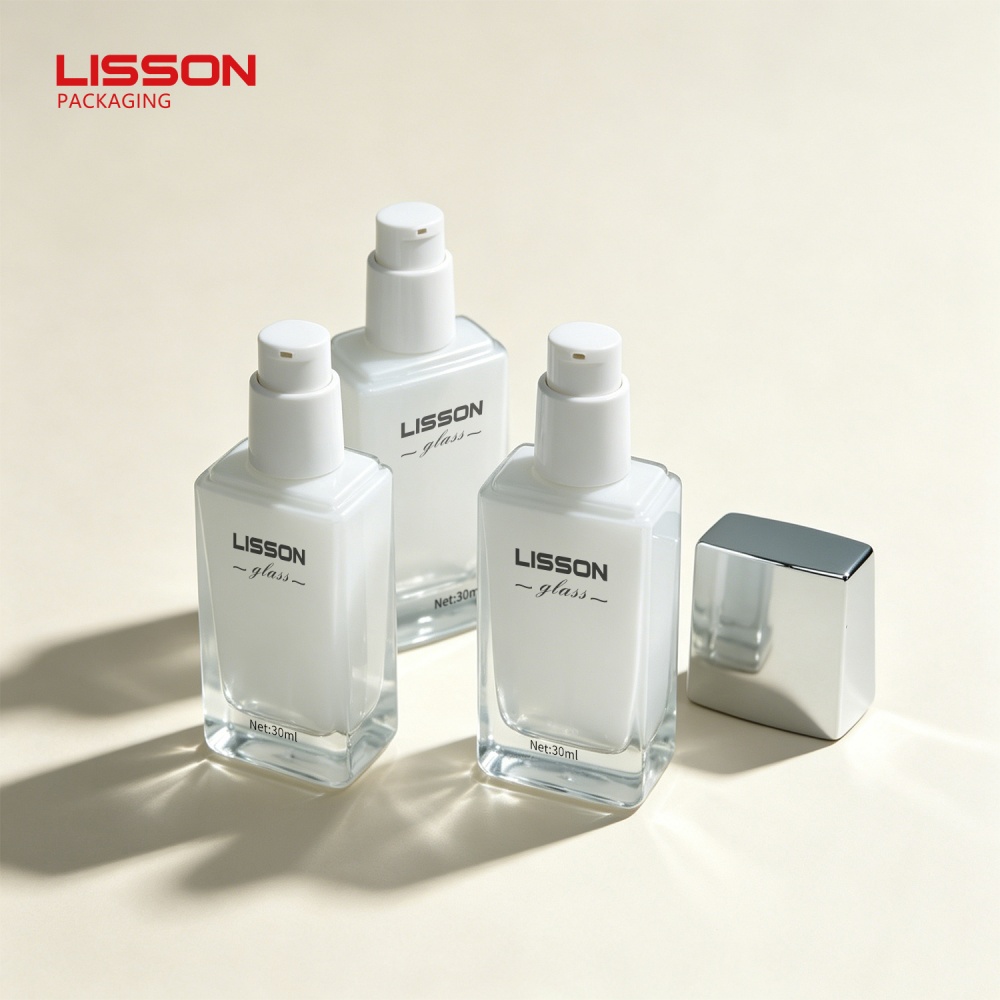
LISSON develops glass cosmetic packaging for skincare, serum, lotion, and fragrance applications. When selecting custom glass bottles, brands should evaluate neck specifications together with the intended filling method and closure system rather than treating them as separate decisions.
What Is Bottle Neck Accuracy in Cosmetic Packaging?
Bottle neck accuracy refers to how closely the actual neck dimensions and finish of a glass bottle match the approved technical drawing and specified manufacturing tolerances.
For cosmetic glass bottles, important neck characteristics include:
- Neck diameter: The opening and external dimensions must match the intended filling and closure requirements.
- Neck height: The vertical dimension influences how the closure sits and engages with the bottle.
- Thread profile: For screw closures, the thread geometry determines how the cap or pump engages with the bottle.
- Thread pitch: The distance between thread features affects how the closure rotates and reaches its intended position.
- Sealing surface: The contact area must be suitable for the liner, gasket, plug, or other sealing structure.
- Neck roundness and concentricity: These characteristics influence the alignment between the bottle opening and the closure.
These dimensions should be checked against the relevant approved specifications. A bottle should not be accepted simply because its opening looks correct or a sample cap can be attached manually.
How Does Neck Accuracy Affect Cosmetic Filling?
Bottle neck accuracy affects filling by influencing how consistently containers can be positioned, handled, and processed on the production line.
During cosmetic filling, bottles are transported through equipment that may include positioning guides, conveyors, filling nozzles, and automatic handling systems. If the neck or opening dimensions vary beyond the equipment's acceptable range, the production process may become less stable.
Possible problems include:
- Filling nozzle alignment problems: An inconsistent opening position may make it harder to maintain the intended nozzle-to-bottle alignment.
- Product splashing: Incorrect positioning or unsuitable nozzle clearance may increase the risk of splashing during filling.
- Inconsistent filling operations: Dimensional variation can affect the repeatability of automated bottle handling.
- Production interruptions: Containers that do not work properly with the equipment may require additional adjustment or manual handling.
- Contamination risks: Unstable bottle positioning or splashing can make production cleanliness more difficult to maintain.
It is important to understand that filling accuracy also depends on the filling machine, nozzle design, formula viscosity, and production settings. Neck precision is one part of the overall filling system, but it should be confirmed before a production line is approved.
Why Does Bottle Neck Accuracy Matter for Automatic Capping?
Bottle neck accuracy directly affects whether automatic capping equipment can install caps, pumps, and other closures consistently.
Automatic capping machines generally rely on controlled bottle positioning, closure feeding, alignment, and tightening. When the neck dimensions are inconsistent, the closure may not engage correctly or may require additional machine adjustments.
Common capping problems associated with neck dimensional issues include:
- Caps that do not engage with the threads correctly.
- Closures that sit at an angle instead of remaining level.
- Uneven tightening across different bottles.
- Cross-threading during automatic assembly.
- Closures that become too tight or remain insufficiently secured.
- Inconsistent sealing performance between production batches.
For example, a lotion pump may require a specific neck finish to achieve proper thread engagement and sealing. If the bottle neck varies beyond the approved tolerance, the pump collar may not sit consistently, even when the pump itself meets its own dimensional specifications.
For premium skincare lines, LISSON's Skincare Glass Packaging Collection includes different bottle formats for lotion, serum, and other liquid skincare products.
What Happens When Bottle Neck Dimensions Are Incorrect?
Incorrect bottle neck dimensions can create several problems throughout packaging production. The most noticeable consequences are poor closure fit, leakage, capping defects, and inconsistent assembly.
The following table summarizes the relationship between common dimensional issues and their possible effects.
| Neck Dimension Issue | Possible Production Problem |
|---|---|
| Incorrect neck diameter | Poor closure fit or inconsistent sealing |
| Incorrect thread profile | Cross-threading or difficult capping |
| Uneven neck height | Incorrect closure seating position |
| Poor neck roundness | Uneven contact and possible sealing problems |
| Damaged sealing surface | Potential leakage or unreliable sealing |
These problems may not appear during a quick visual inspection. That is why dimensional measurements and actual closure compatibility checks should be part of the incoming quality inspection process.

How Should Manufacturers Check Glass Bottle Neck Dimensions?
Manufacturers should use approved technical drawings, suitable measuring instruments, and compatible closure samples to verify bottle neck accuracy.
A practical inspection process includes:
- Review technical drawings: Confirm the required neck finish, dimensions, tolerances, and closure specifications.
- Measure critical dimensions: Check neck diameter, height, thread-related dimensions, and other specified features using appropriate gauges or measuring equipment.
- Inspect the sealing surface: Look for chips, uneven areas, cracks, and other defects that could affect closure performance.
- Check dimensional consistency: Compare multiple samples to identify variation within the production batch.
- Perform closure fit testing: Assemble the intended cap, pump, or dropper and check engagement, alignment, and seating.
- Conduct package-level testing: Evaluate sealing and leakage performance using the intended packaging configuration.
The inspection method should match the bottle design. A threaded serum bottle, a pump lotion bottle, and a fine-mist perfume bottle may have different critical dimensions and closure requirements.
For example, LISSON's Luxury Square Glass Cosmetic Bottles with Round Caps are designed for coordinated skincare packaging, with bottle and closure components that should be evaluated together before production.
How Can Brands Reduce Filling and Capping Problems?
Brands can reduce filling and capping problems by confirming the bottle neck specification early, approving compatible closures, and conducting production trials before placing large orders.
Before mass production, purchasing and quality teams should confirm:
- The bottle neck drawing matches the selected closure specification.
- Critical dimensions have clearly defined acceptance tolerances.
- Production samples can be assembled with the intended caps or pumps.
- Filling and capping equipment can handle the approved bottle design.
- Closure tightening and sealing conditions have been validated.
- Representative samples pass the required leakage and handling tests.
A useful practice is to approve the complete bottle-and-closure combination rather than approving the glass bottle and closure separately. This gives the production team a clear reference for future batches.
Brands requiring controlled openings and dispensing performance can also explore LISSON's Glass Dropper Bottle Collection for different serum and liquid cosmetic packaging applications.
Frequently Asked Questions
Why is bottle neck accuracy important in cosmetic packaging?
Bottle neck accuracy ensures that glass bottles can work correctly with filling equipment, caps, pumps, and other closures. It helps maintain consistent assembly, reliable sealing, and stable production performance.
Which bottle neck dimensions should manufacturers inspect?
Manufacturers should inspect neck diameter, neck height, thread profile, thread pitch, sealing surface, roundness, and other critical dimensions specified in the approved drawing.
Can incorrect neck dimensions cause leakage?
Yes. An incompatible neck finish may prevent the closure from seating or sealing correctly, increasing the risk of leakage during storage, handling, and transportation.
How does bottle neck accuracy affect automatic capping?
Dimensional variation can cause poor thread engagement, uneven closure positioning, cross-threading, and inconsistent tightening during automatic capping.
Does every cosmetic bottle use the same neck finish?
No. Neck finishes vary according to bottle design, capacity, dispensing method, and closure requirements. The selected cap, pump, or dropper must match the specific bottle neck.
How can brands confirm bottle and pump compatibility?
Brands should compare technical drawings, measure critical dimensions, assemble production samples, and evaluate closure fit, alignment, sealing, and leakage performance.
Should bottle neck dimensions be checked before mass production?
Yes. Critical neck dimensions and closure compatibility should be approved before mass production to reduce capping problems, production interruptions, and packaging defects.
Bottle neck precision is a basic requirement for reliable cosmetic packaging production. By confirming neck dimensions, thread specifications, closure compatibility, and filling-line requirements early, cosmetic brands can reduce avoidable production problems and achieve more consistent packaging quality.