
The Ultimate Guide to Spiral Duct Machines: Types, Features, and How They Work
A spiral duct machine forms round ductwork from flat metal coil. It feeds, shapes, and locks the strip into a continuous spiral tube. HVAC and ventilation systems rely on this ductwork to move air through buildings.
These machines matter because they turn raw coil into airtight round duct quickly and consistently. This guide explains the main types of Spiral Duct Machines, the features that separate them, how they work, and how to choose the right one.
Key Takeaways
- Spiral duct machines turn flat metal coil into round ductwork for HVAC systems.
- Choose from three main types: tube formers, lockseam and elbow machines, and automation levels.
- Key features include diameter range, thickness capacity, speed, controls, and build quality.
- The machine feeds, forms, lockseams, and cuts metal strip into continuous spiral tubes.
- Match machine performance to your typical duct sizes and production volume.
- Check compliance with local codes and project specifications for duct construction.
- Consider total cost, including tooling and operator time, plus supplier support.
- Assess your production needs first, then consult experts for the right machine.
Types of Spiral Duct Machines
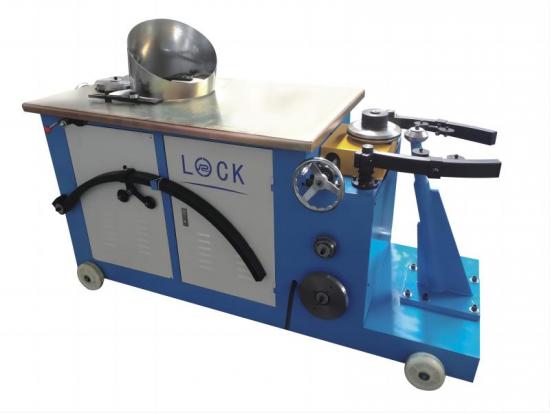
Buyers meet a crowded market. The categories below sort that market by three practical questions: what the machine forms, how much it does on its own, and how much output a shop needs.
By Forming Function
Spiral Tube Formers
A spiral tube former is the core machine in most round-duct shops. It takes a narrow strip of metal coil and rolls it into a continuous spiral tube. The strip edges lock together along a seam that runs the length of the duct. This machine produces straight round duct in a fixed diameter per setup. Changing diameter means changing tooling or adjusting the forming head, depending on the model. A spiral duct forming machine of this class handles the bulk of standard HVAC round ductwork.
Lockseam and Elbow Machines
Round duct systems need more than straight runs. Lockseam machines close the longitudinal seam on fittings and connectors. Elbow machines form segmented elbows that turn the air path. These machines complement the tube former rather than replace it. A shop that sells complete systems usually runs all three types together.
By Automation Level
Manual and Semi-Automatic
Manual machines rely on the operator for coil loading, diameter setting, and cut-off. Semi-automatic models motorize the forming and cutting steps. The operator still handles setup and coil changes. These machines suit job shops with varied orders and modest volumes. They cost less up front and take less floor space. The trade-off is more hands-on time per duct and greater dependence on operator skill.
Fully Automatic Lines
Fully automatic lines handle coil feeding, forming, locking, and cutting with minimal intervention. Some models change diameter from a control panel without manual tooling swaps. These lines shine in repetitive, high-volume production. They demand a larger investment and a steadier order book. A shop with predictable, large runs recovers the cost through labor savings and consistent output.
By Output Scale
Compact Shop Machines
Compact machines fit small workshops and startup operations. They form duct in a limited diameter range and run at moderate speed. Footprint and power draw stay low. A contractor who fabricates duct for their own installs often finds this class sufficient. The machine pays for itself by replacing purchased duct with in-house production.
High-Volume Industrial Lines
Industrial lines target duct manufacturers and large mechanical contractors. They cover a wide diameter range and run continuously through long shifts. Heavy frames and robust drive systems support constant use. These lines pair well with automated coil handling and downstream processing equipment. The investment is substantial, and the payoff comes from scale.
The three groupings overlap in practice. A compact machine can be fully automatic, and a tube former can sit inside a large industrial line. Buyers should classify their own needs first, then match the machine class to those needs.
Key Features
Diameter Range and Thickness
Diameter range defines the smallest and largest round duct a machine can form. A wider range lets a shop serve more projects without buying extra tooling. Buyers should compare this range against the sizes their typical jobs demand. A machine that covers common HVAC sizes handles most residential and light commercial work. Shops that fabricate large industrial duct need a machine with a broader upper limit.
Thickness capacity sets the heaviest metal gauge a machine can form. Gauge describes metal sheet thickness, and a lower gauge number means thicker metal. Standard HVAC duct uses light gauge, while industrial work often calls for heavier stock. A machine rated for heavier gauge offers more flexibility across job types. Buyers should check that the rated thickness holds across the full diameter range, not just at one size.
Speed, Power, and Controls
Production speed determines how many feet of duct a machine forms per hour. Speed matters most in shops with steady, repetitive orders. A high-speed machine delivers little benefit when changeovers dominate the workday. Buyers should weigh speed against setup time and match both to their order pattern.
Power and controls shape daily operation. Motor power must suit the thickness and width of the coil. Weak power slows forming on heavy stock. Control systems range from simple push-button panels to programmable interfaces. Digital controls simplify diameter changes and repeat settings. A spiral flat oval machine often pairs specialized forming heads with these controls, and buyers should confirm the control system supports the shapes they plan to produce.
Build Quality and Durability
Frame rigidity and drive component quality decide how long a machine holds tolerance. A flexing frame throws off seam alignment and shortens tooling life. Buyers should inspect frame construction, bearing quality, and the hardening of forming rolls. Robust construction standards, such as those Lockforming Machinery applies, give buyers a useful benchmark for judging these details.
Durability also depends on service access. Machines with easily reached wear parts need less downtime for maintenance. Shops running Spiral Duct Machines through long shifts should prioritize heavy-duty drives and replaceable wear components. A well-built machine protects output quality over years of use, and that reliability belongs on every comparison checklist.
How Spiral Duct Machines Work
Coil Feeding and Strip Prep
Production starts at the coil cradle. A worker loads a coil of flat metal strip onto a mandrel or uncoiler. The machine then pays the strip out at a controlled rate. A straightener removes the curl left by coiling. Guide rollers keep the strip centered as it travels toward the forming head.
Strip prep continues with edge treatment. Some setups slit the strip to the exact width the duct diameter requires. Others rely on pre-slit coil ordered to size. Clean edges matter here. A burred or wavy edge produces a weak seam and a poor lock. Operators check strip width and edge condition before each run. A misaligned feed shows up later as a crooked seam, so this stage sets the quality of everything that follows.
Forming and Lockseaming
The forming head does the core work. Rollers bend the flat strip into a curved profile as it passes through. The strip then enters the lockseam station. Here the two edges interlock and press together to form a tight joint. The seam runs in a spiral around the tube, which gives the duct its name and its strength.
A Flex spiral forming machine follows this same sequence with adjustable heads for different diameters. The operator sets the forming angle and seam profile to match the strip gauge. Heavier gauge needs more roll pressure and slower feed. The finished tube exits as a continuous spiral, and the seam holds the round shape without extra support. Correct roll alignment keeps the seam uniform along the full length of the duct.
Cutting, Output, and Safety
A flying cut-off separates the tube from the continuous spiral. The cutter travels with the duct during the cut, so production does not stop. The operator sets the length, and the machine repeats that length for each piece. Finished sections then move to a run-out table or stacking rack.
Safety deserves equal attention on Spiral Duct Machines. Rotating rolls and shear blades create pinch and cut hazards. Guards must stay in place during operation. Operators should keep hands clear of the forming head and use the cut-off only as designed. Lockout procedures protect workers during tooling changes and maintenance. A clean floor around the coil cradle prevents trips near moving strip. Good housekeeping and trained operators keep output steady and injuries rare.
Choosing the Right Machine
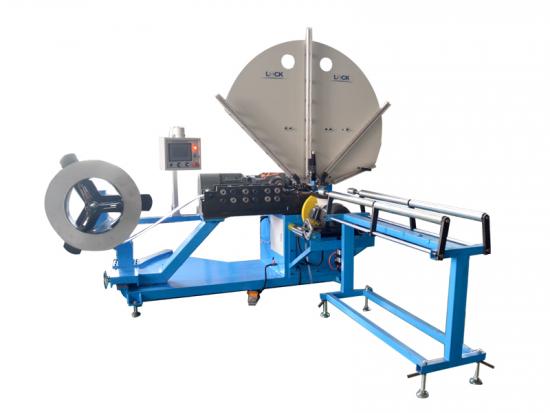
A shortlist of machines can look impressive on paper and still fail on the shop floor. The right choice comes from matching three things: what the machine can do, what the work demands, and what the buyer can sustain over time. The checklist below walks through each in turn.
Performance Fit
Performance fit starts with the diameter range and thickness capacity. A buyer should list the duct sizes that appear most often in recent jobs. The machine should cover that list without constant tooling changes. A machine that barely reaches the largest common size leaves no room for growth. One that covers sizes the shop never sells adds cost without adding value.
Speed deserves the same scrutiny. A high-speed machine pays off when orders repeat and changeovers are rare. A shop with varied, small-batch work gains more from fast setup than from raw forming speed. Buyers should compare the time to change diameter against the time to form a run. The ratio tells them which Spiral Duct Machines suit their order pattern.
Automation level belongs in this comparison too. Manual and semi-automatic models fit shops with modest volumes and skilled operators. Fully automatic lines fit predictable, high-volume production. Neither choice is better in the abstract. Each fits a different production profile, and the buyer's own order history is the best guide.
Application and Compliance
Application fit asks what the duct will serve. Residential and light commercial HVAC work calls for standard round duct in common sizes. Industrial ventilation may need heavier gauge and larger diameters. A machine rated for the heaviest job in that mix offers the most flexibility. Buyers should confirm the rating holds across the full diameter range, not just at one size.
Compliance adds a second layer. Local codes and project specifications may set requirements for duct construction, seam strength, and material. Buyers should check which standards their market expects and confirm the machine can meet them. A machine that forms a tight, uniform lockseam supports compliance more easily than one with inconsistent seam pressure. Documentation from the builder helps here. Buyers should ask for test data and material certificates before they commit.
The application also shapes the supporting equipment. A shop that sells complete systems needs lockseam and elbow machines alongside the tube former. A contractor who fabricates only straight runs can skip them. Mapping the full product mix prevents a purchase that covers half the job.
Cost and Support
Purchase price is only one line in the cost picture. Buyers should weigh the initial investment against floor space, power draw, tooling costs, and operator time. A cheaper machine that needs frequent tooling swaps can cost more over a year than a pricier model with fast changeovers. The same logic applies to automation. A fully automatic line saves labor, and it only pays back when volume stays high enough to keep it busy.
Support belongs in the same calculation. A machine is a long-term asset, and downtime erodes its value quickly. Buyers should ask about spare parts availability, response times, and training for operators. Lockforming Machinery offers guidance during selection and after-sales support after delivery, and that combination gives buyers a practical benchmark when they compare suppliers. A supplier who answers technical questions clearly before the sale usually answers them after it too.
A simple checklist keeps the decision grounded. Confirm the diameter range and thickness capacity against real job data. Confirm the speed and automation level against the order pattern. Confirm compliance with the standards the market requires. Confirm the total cost, including tooling and operator time. Confirm the support terms in writing. Buyers who work through these points in order end up with Spiral Duct Machines that fit their production, their projects, and their budget.
A spiral duct machine turns flat metal coil into round ductwork for HVAC and ventilation systems. This guide covered the main types: tube formers, lockseam and elbow machines, manual through fully automatic models, and compact to industrial lines. It also covered key features — diameter range, thickness capacity, speed, controls, and build quality — plus the coil feeding, forming, lockseaming, and cutting steps behind every run.
Selection comes down to four checks: performance fit, application and compliance, and total cost with support. Buyers who match all four make a confident purchase decision. Readers should assess their own production needs first, then consult Lockforming Machinery for guidance on Spiral Duct Machines that fit their shop.
FAQ
What does a spiral duct machine actually produce?
It turns flat metal coil into round duct. Rollers curve the strip, and a lockseam joins the edges into a continuous spiral tube. HVAC and ventilation crews install that duct to move air through buildings. The output is straight round sections in a set diameter per setup.
How does a spiral tube former differ from a lockseam machine?
A tube former builds the straight round duct itself. A lockseam machine closes the longitudinal seam on fittings and connectors. Elbow machines shape the turns. Most shops that sell complete systems run all three together, because straight runs alone rarely finish a job.
Can one machine cover every duct diameter a shop needs?
Rarely. Each Spiral Duct Machine forms a set diameter range, and changing size means adjusting the head or swapping tooling. Buyers should list the sizes their recent jobs used. A machine that covers that list, with some room to grow, serves better than one built for extremes.
How much automation does a small shop need?
It depends on order volume. Manual and semi-automatic models suit varied, modest workloads and cost less up front. Fully automatic lines fit repetitive, high-volume runs. A shop with unpredictable orders gains little from automation it cannot keep busy.
What does gauge mean in duct fabrication?
Gauge describes metal sheet thickness, and a lower number means thicker metal. Standard HVAC work uses light gauge. Industrial ventilation often calls for heavier stock. Buyers should confirm the machine's rated thickness holds across the full diameter range, not at one size only.
Why does lockseam quality matter so much?
The seam holds the round shape and keeps the duct airtight. A tight, uniform lockseam supports code compliance and steady airflow. A weak or crooked seam fails both. Buyers should check roll alignment and frame rigidity, since a flexing frame throws seam alignment off.
How should a buyer judge build quality before purchase?
Inspect frame construction, bearing quality, and the hardening of forming rolls. Ask how easily operators can reach wear parts, because service access shortens downtime. Robust construction standards, such as those Lockforming Machinery applies, give buyers a practical benchmark for these checks.
What support should come with the machine?
A machine is a long-term asset, and downtime erodes its value fast. Buyers should ask about spare parts availability, response times, and operator training. Lockforming Machinery offers selection guidance and after-sales support, which gives buyers a fair comparison point when weighing suppliers.