
Ceramic Coating vs Exhaust Wrap
Ceramic Coating vs Exhaust Wrap: Which Is Better for Your Exhaust System?
Ceramic coating is generally the better choice for long-term exhaust protection, while exhaust wrap is a more affordable option for reducing radiant heat around exhaust pipes. The main difference is how they manage heat: ceramic coating creates a thin protective layer bonded to the metal surface, whereas exhaust wrap uses layers of insulating fibers to retain heat inside the pipe. For street cars and performance builds where durability and corrosion protection matter, ceramic coating is often preferable. For budget-conscious projects or areas requiring additional localized heat control, exhaust wrap can be a practical solution.
Choosing between ceramic coating and exhaust wrap depends on more than temperature ratings. Material compatibility, installation quality, operating conditions, maintenance requirements, and total ownership cost all affect the result. This guide compares both solutions using technical specifications and practical automotive applications to help drivers, performance shops, and automotive parts buyers make an informed decision.
Updated: November 6, 2026 | Technical editorial: Jagrow Tuning
What Is Ceramic Coating and How Does It Work?
Ceramic coating is a high-temperature coating applied to exhaust components such as headers, exhaust manifolds, turbocharger housings, and downpipes. The coating is normally spray-applied and cured according to the manufacturer's process, forming a thin protective layer on the metal surface.
Unlike traditional insulation materials, ceramic coating does not cover the exhaust with a thick fabric layer. Instead, it provides a thermal barrier while protecting the underlying metal against oxidation and corrosion.
Its main functions include:
- Reducing radiant heat transferred from exhaust components to nearby engine bay parts.
- Helping retain heat within the exhaust system.
- Providing additional resistance to oxidation and corrosion.
- Maintaining a relatively clean, compact finish without adding bulky insulation.
- Supporting long-term protection under repeated thermal cycling when correctly applied.
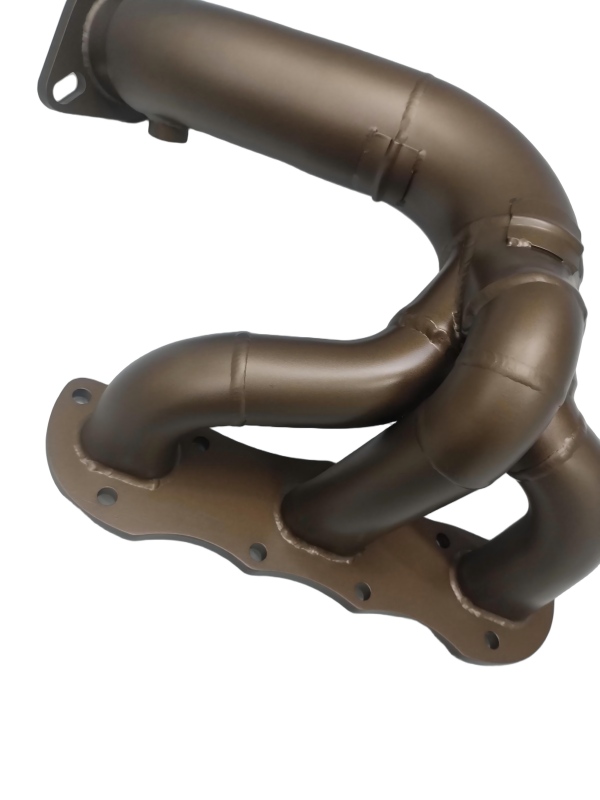
For performance vehicles, ceramic coating is particularly relevant to exhaust manifolds and headers located close to wiring, hoses, intake components, and other heat-sensitive parts. The coating should be selected according to the component material and expected operating temperature.
When developing a performance exhaust system, the underlying manifold and pipe construction also matter. Explore Jagrow custom exhaust manifolds for different automotive applications and exhaust system configurations.
What Is Exhaust Wrap and How Does It Work?
Exhaust wrap is a flexible thermal insulation material installed around exhaust pipes and headers. Common materials include fiberglass, basalt fiber, and silica fiber. The wrap is secured with metal ties or clamps and usually installed with overlapping layers.
Its primary purpose is to reduce heat radiation from exhaust pipes into the surrounding engine compartment. By insulating the pipe externally, exhaust wrap helps maintain higher exhaust gas temperatures while reducing the amount of radiant heat reaching nearby components.
Common benefits include:
- Reducing radiant heat exposure around exhaust pipes.
- Providing additional thermal protection in confined engine compartments.
- Offering a relatively low-cost alternative to professional ceramic coating.
- Allowing DIY installation with suitable materials and tools.
- Adapting to curved pipes and different exhaust layouts.

Different wrap materials have different temperature ratings. Fiberglass products are generally intended for lower temperature applications than some specialized basalt or silica products. Buyers should always check continuous and intermittent temperature limits instead of relying on a single maximum temperature claim.
Jagrow provides different heat insulation products for automotive applications, including fiberglass heat wrap, heat-resistant sleeves, and other thermal protection materials. Visit the Jagrow Heat Wrap product range to explore available options.
Ceramic Coating vs Exhaust Wrap: Key Differences at a Glance
The following table summarizes the main differences between ceramic coating and exhaust wrap. Temperature and thickness figures are representative manufacturer-published specifications, not universal values for every product.
| Comparison | Ceramic Coating | Exhaust Wrap |
|---|---|---|
| Material | Cured ceramic-based coating | Fiberglass, basalt, or silica fibers |
| Typical construction | Thin bonded surface layer | Multiple overlapping insulation layers |
| Example thickness | 1–2 mil (approximately 25–51 μm) | Depends on material, weave, and installation layers |
| Example temperature rating | 1,850°F continuous; 2,150°F intermittent for one commercial coating specification | 1,200°F continuous and 2,000°F intermittent for one basalt wrap product |
| Heat management | Thermal barrier on the component surface | Insulating barrier around the pipe |
| Corrosion protection | Can provide direct surface protection | May retain moisture against the pipe |
| Installation | Professional preparation, application, and curing | Manual wrapping and fastening |
| Initial cost | Generally higher | Generally lower |
| Maintenance | Periodic visual inspection | Regular inspection and replacement when damaged |
| Best application | Long-term exhaust surface protection | Localized heat control and budget projects |
Important technical note: Temperature ratings are product-specific. A coating's maximum temperature and a wrap's continuous temperature rating are not necessarily measured under identical conditions. They should not be treated as a direct performance comparison without reviewing the respective technical data sheets.
Which Provides Better Heat Insulation Performance?
Both ceramic coating and exhaust wrap can reduce heat radiation, but their effectiveness depends on the material, installation method, exhaust temperature, and surrounding environment.
Ceramic coating: A properly applied thermal barrier coating reduces radiant heat transfer from the exhaust surface. For example, Calico Coatings lists its CT-25 CoolBlack II ceramic coating with a 1–2 mil thickness, a maximum continuous temperature rating of 1,850°F, and an intermittent rating of 2,150°F.
Exhaust wrap: The insulation layer physically surrounds the exhaust pipe, limiting heat transfer to the surrounding air. Heatshield Products lists its Lava Wrap with a continuous temperature rating of 1,200°F and an intermittent rating of 2,000°F. Its published product information also reports underhood temperature reductions of up to 50% under its specified testing and application conditions.
These examples demonstrate why material specifications matter. A higher intermittent temperature rating does not automatically mean better insulation performance during everyday driving.
For most street vehicles, ceramic coating offers a balanced solution when surface protection, appearance, and long-term consistency are priorities. Exhaust wrap can be useful when a specific section of the exhaust requires additional external insulation.

For more information about exhaust system configurations and compatible components, see Jagrow performance exhaust downpipes.
Durability, Corrosion Protection, and Expected Service Life
Durability is one of the biggest differences between ceramic coating and exhaust wrap.
Ceramic coating bonds to the prepared metal surface and does not create a fabric layer that can absorb water or contaminants. Quality coatings are designed to withstand repeated heating and cooling cycles. When the substrate is properly prepared and the coating is correctly cured, it can provide long-term surface protection.
Exhaust wrap is more exposed to environmental conditions. Depending on the material and installation, it may absorb moisture, oil, and road contaminants. Moisture trapped between the wrap and metal can contribute to corrosion, particularly on mild steel exhaust components.
Repeated thermal cycles can also cause fibers to become brittle, fray, or lose their original insulation properties. Regular inspection is therefore important, especially on vehicles driven in wet climates or exposed to road salt.
There is no universal service-life figure that applies to all ceramic coatings or exhaust wraps. Actual lifespan depends on:
- Exhaust material, wall thickness, and surface condition.
- Continuous operating temperature and thermal cycling frequency.
- Exposure to moisture, road salt, oil, and chemicals.
- Installation quality and compatibility of the insulation material.
- Vehicle usage, including daily driving, racing, and track conditions.
Practical recommendation: Ceramic coating is generally preferable when corrosion resistance and long-term exhaust surface protection are priorities. Exhaust wrap should be inspected periodically and replaced when it becomes damaged, loose, contaminated, or degraded.
Installation, Maintenance, and Total Cost
Initial purchase price is only one part of the decision. Installation labor, maintenance, component replacement, and the expected service life should also be considered.
Ceramic coating installation
- The exhaust component must be cleaned and properly prepared.
- Coating is applied at the specified thickness.
- The component must undergo the required curing process.
- Application quality and substrate compatibility affect the final result.
Professional ceramic coating usually costs more initially because it requires specialized equipment, surface preparation, and curing. However, once correctly applied, it generally requires less routine maintenance than exhaust wrap.
Exhaust wrap installation
- Measure the exhaust pipe and select the appropriate wrap width and length.
- Install the material with consistent overlap.
- Secure both ends with suitable high-temperature fasteners.
- Check clearance from wiring, hoses, and other heat-sensitive parts.
- Inspect the wrap periodically for damage or loosening.
Exhaust wrap normally has a lower initial material cost and can be installed without professional coating equipment. However, installation time, inspection, and potential replacement should be included when calculating long-term ownership costs.
For automotive manufacturers and aftermarket brands sourcing thermal protection products, Jagrow offers customized solutions with product options including fiberglass sleeves, basalt sleeves, heat-resistant tapes, and other exhaust insulation components.
Explore Jagrow exhaust accessories for additional exhaust protection products.
Which Option Is Better for Different Automotive Applications?
The best solution depends on the vehicle type, exhaust material, engine layout, and thermal management objectives.
Daily street cars: Ceramic coating is generally a better choice for drivers who want a clean finish, surface protection, and reduced routine maintenance. It is particularly useful for exhaust manifolds and headers located close to other engine components.
High-performance and turbocharged vehicles: Both solutions can be useful. Ceramic coating is suitable for exhaust manifolds, turbine housings, and downpipes, while wraps or dedicated heat shields can provide localized protection where additional insulation is required.
Motorsports and track vehicles: Exhaust wrap can help reduce radiant heat around specific exhaust sections. However, high exhaust temperatures and repeated thermal cycling make material selection and inspection especially important.
Budget-focused modifications: Exhaust wrap is often more economical for projects where reducing initial costs is a priority. The material should still be selected according to its continuous operating temperature and compatibility with the exhaust substrate.
OEM and aftermarket exhaust manufacturing: Ceramic coatings, heat wraps, metal heat shields, and thermal sleeves can serve different purposes within the same exhaust system. The right combination depends on component design, packaging space, temperature exposure, and product requirements.

For projects requiring customized exhaust components, Jagrow also supplies custom exhaust manifold solutions for different vehicle platforms.
Ceramic Coating or Exhaust Wrap: The Final Verdict
There is no single solution that works best for every exhaust system. Ceramic coating and exhaust wrap are designed for different thermal management requirements.
Choose ceramic coating if you need:
- Long-term exhaust surface protection.
- Better resistance to oxidation and corrosion.
- A clean and professional finish.
- Consistent thermal barrier performance.
- Lower routine maintenance requirements.
Choose exhaust wrap if you need:
- A lower initial material cost.
- Flexible insulation around curved exhaust pipes.
- Localized reduction of radiant heat.
- A practical solution for specific motorsports applications.
- An insulation material that can be installed without specialized coating equipment.
For most performance street cars, ceramic coating is a strong choice for long-term exhaust protection. Exhaust wrap remains useful when targeted heat insulation and lower upfront costs are more important.
At Jagrow, we understand that exhaust performance is closely connected to material selection, component design, and thermal management. Since 2008, Jagrow has focused on automotive performance parts, including exhaust systems, cooling systems, and air intake components. We support OEM and ODM projects with customized product development based on customer samples, drawings, and application requirements.
Whether you are sourcing exhaust heat wraps, insulation sleeves, custom manifolds, or complete exhaust components, contact Jagrow Tuning to discuss your automotive performance parts requirements.
Frequently Asked Questions About Ceramic Coating and Exhaust Wrap
Is ceramic coating better than exhaust wrap?
For long-term exhaust protection, ceramic coating is generally better because it bonds to the metal surface, provides corrosion resistance, and requires less routine maintenance. Exhaust wrap is often more affordable and useful for localized heat insulation.
Does exhaust wrap reduce engine bay temperature?
Yes. Exhaust wrap can reduce radiant heat released from exhaust pipes into the engine compartment. The actual temperature reduction depends on the wrap material, installation quality, exhaust temperature, and surrounding airflow. Some manufacturers publish reductions of up to 50% under specific test conditions.
What temperature can ceramic exhaust coating withstand?
Temperature resistance varies by coating formulation. For example, Calico Coatings lists its CT-25 CoolBlack II ceramic coating with a maximum continuous temperature rating of 1,850°F and an intermittent rating of 2,150°F. Always check the technical data sheet for the selected coating.
Can exhaust wrap cause exhaust pipe corrosion?
It can increase corrosion risk when moisture and contaminants become trapped between the wrap and the exhaust pipe. The risk depends on the pipe material, environment, and wrap condition. Regular inspection is recommended, especially for mild steel exhaust systems.
Can ceramic coating and exhaust wrap be used together?
Yes, in some applications. Ceramic coating can protect the exhaust component surface, while a compatible external wrap or heat shield can provide additional localized insulation. However, the combination must be approved for the coating, wrap material, operating temperature, and component design.